Step 7… Meditation
Blessings, Dear Friends,
Welcome to Step 7… Meditation.
As we continue our mysterious journey upward through the Chakras and the Spine, we arrive at the fourth chakra in the human body, the Heart Chakra, also known as Anahata. It represents love, compassion, empathy, and emotional balance, and reflects our kindness and inner harmony. It is associated with the ability to give and receive love freely and to connect deeply and authentically with others.
This chakra invites us to open our hearts to love, compassion, and emotional healing, and to cultivate a gentle presence toward ourselves and those around us. It encourages a healthy balance between giving and receiving love, encouraging us to forgive, show empathy, and develop meaningful connections with others.
Meditation
Be still and know that I am God Psalm 46:10
I have been meditating on and off now for over 21 years, with the last five years being the longest I have fully committed myself to a regular practice. Meditation has become a deep and regular part of my life, where it has been a labour of love for God, a devoted offering in which I bring my best. Meditation is a sacred and cherished time for me to allow God's love to embrace me and to recharge my spirit in the quiet stillness. My practice calms my restless mind, brings deep peace, and sharpens my intuition. It also empowers me to move through and overcome fears, grief and worries, granting me greater clarity, emotional balance, and lasting peace of mind.
Have God first. Have God now. Don’t wait, because delusion is very strong. Before you know it, the time will have come for you to quit this world. Whenever you have a moment, sit down and meditate.
Paramhansa Yogananda
This month, I invite you all to set aside a little quiet time each day to sit and meditate without distractions. Consciously call on Christ’s love and peace to be present with you, gently nourishing your soul and opening your heart so that you may receive all that he longs to give you in meditation.
-
Remain in me, as I also remain in you. No branch can bear fruit by itself; it must remain in the vine. Neither can you bear fruit unless you remain in me.
-
I Go Within
Let my meditation race for the sweet bower of eternal divine love. Luring aroma of lilacs, jasmine, and roses, stop not my homeward-marching mind! These tempting enchantresses of the senses are now gone. The cords of flesh are broken. The grip of the senses is loosened. I exhale and stop the storm of breath; the ripples of thought melt away.
I am sitting on the altar of my throbbing heart. I watch the roaring, shouting torrent of life-force moving through the heart into the body. I turn backward to the spine. The beat and roar of the heart are gone. Like a sacred hidden river my lifeforce flows in the gorge of the spine. I enter a dim corridor through the door of the spiritual eye, and speed on until at last the river of my life flows into the ocean of Life and loses itself in bliss.
-
Thy rod and thy staff they comfort me
-
All night long I lie awake, to meditate on your instructions. Because your love is constant, hear me, O Lord; show your mercy, and preserve my life!
-
Affirmation: God is the meditation of my heart
-
After spending some time in reading, reflection and journaling … Refer to the Visualisation & meditation and when you have finished, if you feel too… You can offer your gratitude and devotion to Jesus Christ by drawing art or writing poetry or finding your own meaningful hearts way.
Niyamas Tapasya (Austerity)
-
The quest of Truth involves tapas-self-suffering-sometimes even unto death.
-
8. Self-discipline (tapas) includes celibacy, restraint of appetite, and various methods of training the body to withstand cold, heat, and other discomforts without the usual mental agitation. If practiced with discrimination and right resolve, these mortifications help the devotee to attune his body and mind to spiritual vibrations.
Self-discipline is different from selftorture. The aim of tapas is not served by startling exhibitions, such as “fakirs” on beds of sharp nails. The profound purpose of tapas is to change in man his “bad taste” in preferring transient sense pleasures to the everlasting bliss of the soul. Some form of self-discipline is necessary to transmute material desires into spiritual aspirations. By tapas and meditation the devotee gives himself a standard of comparison between the two kinds of pleasures: physical and mental on the one hand, and spiritual on the other.
A habitually lazy person who is forced to become a day laborer feels a bodily distress unknown to those who are used to hard work. Similarly, the devotee who compels himself to follow a course of selfdenial feels physical and mental misery in the beginning. Ignoring the rebellion of his body-identified ego, he should gradually accustom himself to the strenuous life of a spiritual athlete. As he continues the purificatory actions of tapas he finds not the torment he had dreaded, but deep peace and joy.
-
Every act of the yogi should be deliberate. He should sit with a sense of setting his body down to rest, rather than of collapsing into a chair. He should move, talk, smile, and eat always with a sense that he is his own master, never with the feeling that his body is running away with him like a car on a hill when its brakes suddenly fail.
When you sit to meditate, discipline your mind to behave. Don’t let it run away with you merely because it wants to, because that is its habit. Make the very first minutes of meditation as earnest and deep as the last.
-
Tapasya helps us to discipline our minds in our prayer, meditation, and yoga practice, cultivating our inner strength. It encourages fasting, refraining from gossiping and observing silence. It helps us to embrace an attitude of spiritual maturity by not being influenced by lower vibrations or negative habits such as whining and complaining. Instead, consciously choosing to remain centred in higher positive thoughts and attitudes.
Visualisation (4th chakra - Heart -Anahata Chakra) by Prashanti
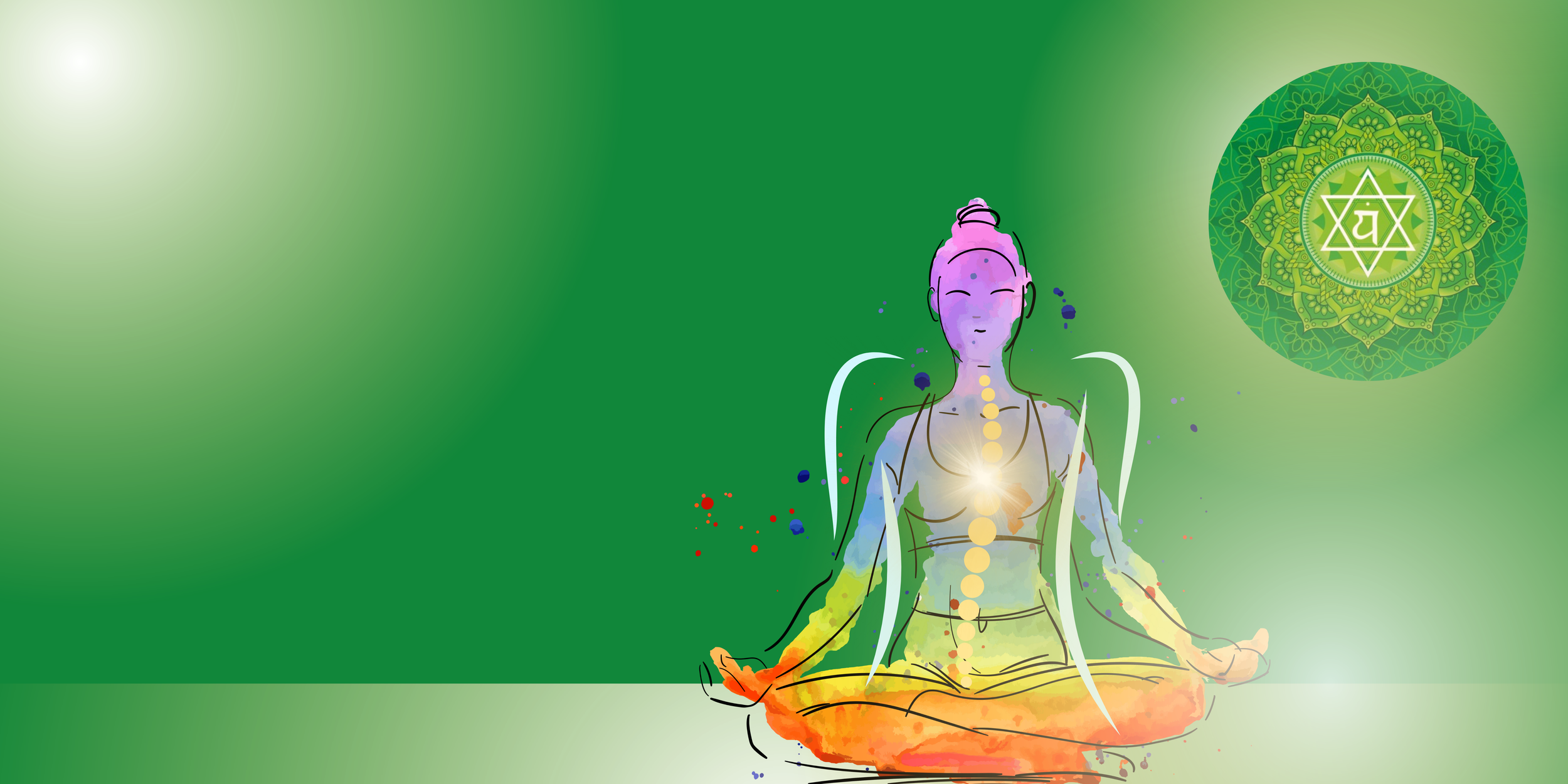
As we consciously align our faith, trust, and speech with the eternal words of God, let us mindfully direct our devotion towards the Heart Chakra, honouring the heart space that lives within us, that is always playing us loving melodies from the rhythm of its beat. Let us now take a quiet, peaceful moment to gaze thoughtfully at the image before us, gently connecting with the deep, rich, vibrant green that beautifully represents this chakra.
Focus your full attention on the Heart Chakra. With each gentle and mindful breath, calm and steady in rhythm, begin to slowly close your eyes, maintaining the focus of the heart Chakra firmly within.
Feel a warm, harmonious green light gently filling your entire body, bringing you love, harmony, comfort and compassion throughout every fibre of your being. This luminous, awakened loving energy invites the presence of unconditional love to settle deeply within you, warming your core and softening any tension. Notice how these loving vibrations and waves make you feel calm, safe, and held. Now, gently observe how these soft waves flow up and down your spine, encouraging you to relax more fully with each breath and release what no longer serves you. Cherish this inner stillness that surrounds, heals, supports, and protects you in every way. With every inhale and exhale, feel your connection to this quiet strength deepen, drawing more love into your heart and radiating out and expanding peace. Allow yourself to rest here and remain in the presence of your heart for as long as you need.
Now, let us quietly and reverently affirm together the sacred words from the Psalms, St John and Paramhansa Yogananda.
The Lord is my Shepherd, I shall not want. Thy rod and thy staff they comfort me.
Remain in me, as I also remain in you. No branch can bear fruit by itself; it must remain in the vine. Neither can you bear fruit unless you remain in me.
All night long I lie awake, to meditate on your instructions. Because your love is constant, hear me, O Lord; show your mercy, and preserve my life!
Let my meditation race for the sweet bower of eternal divine love. Luring aroma of lilacs, jasmine, and roses, stop not my homeward-marching mind! These tempting enchantresses of the senses are now gone. The cords of flesh are broken. The grip of the senses is loosened. I exhale and stop the storm of breath; the ripples of thought melt away.
The Lord is my Shepherd, I shall not want. Thy rod and thy staff they comfort me.
Aum Peace Amen
Sacred Music & Mantras
Book References
Ghandhi, M. (N.D) The Eleven Vows of Mahatma Gandhi-Their Observances and Relevance
https://www.gandhi-manibhavan.org/educational-resources/the-eleven-vows-of-gandhiji.html
New International Version. (2025). BibleGateway.com. https://www.biblegateway.com/
Yogananda, P. (1952). Metaphysical Meditations. 1952 Edition. Crystal Clarity Publishers.
Yogananda, P. (2007). How to Love and Be Loved: Wisdom of Yogananda. Crystal Clarity Publishers.
Yogananda, P. (2021). God Talks With Arjuna: The Bhagavad Gita. Ebook Edition. International Publications Council of Self-Relization Fellowship.
Yogananda, P. (2021). Scientific Healing Affirmations: Theory and Practice of Concentration. Ebook Edition. International Publications Council of Self-Relization Fellowship.
Yogananda, P. (N.D) Whispers From Eternity. https://www.ananda.org/free-inspiration/books/whispers-from-eternity/
Yogananda, P. (2021).The Divine Romance: Collected Talks & Essays on Realizing God in Daily Life, Volume II. Ebook Edition. International Publications Council of Self-Relization Fellowship.
